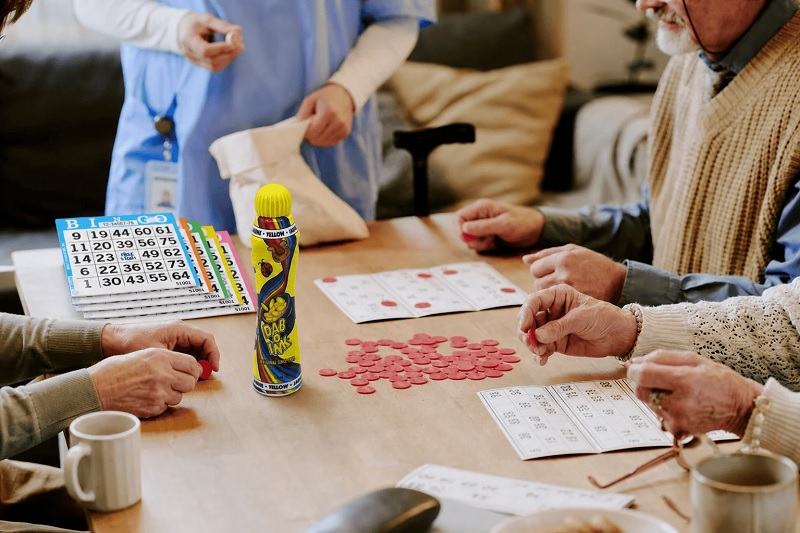
For decades, the word bingo conjured a very specific image: a crowded hall, a caller shouting numbers over a microphone, and rows of players meticulously stamping their paper cards with ink daubers. While that traditional communal atmosphere remains a beloved part of the culture, the game itself has undergone a massive transformation. The digital revolution has shattered the geographical and physical limitations of the classic game, giving rise to a diverse ecosystem of bingo formats.
Today, bingo is a dynamic, multi-faceted gaming category. Developers and platform operators have experimented with ball counts, grid sizes, winning patterns, and game speeds to create highly distinct variations. These variations do not just change the rules; they fundamentally alter the playing experience. Some formats are designed for prolonged suspense and social interaction, while others are built for high-octane speed and instant gratification. Understanding the nuances of these different formats allows players to curate their gaming sessions to match their specific moods, time constraints, and risk preferences.
The American Classic: 75-Ball Bingo
If you grew up playing bingo in the United States, 75-ball bingo is likely the format you know best. It is the undisputed champion of North American bingo halls and remains a dominant force in the digital space. The visual layout of this format is iconic: a 5×5 grid featuring 25 squares, with the letters B-I-N-G-O displayed horizontally across the top. The center square is universally designated as a Free Space, giving every player a one-square head start before the first ball is even drawn.
The defining characteristic of 75-ball bingo is its heavy reliance on pattern recognition. While standard play often involves simply completing a single horizontal, vertical, or diagonal line, the true charm of this format lies in its flexibility. Callers can designate an almost infinite number of winning shapes. Players might be tasked with daubing a specific letter of the alphabet, forming a diamond, marking the four corners of the card, or chasing the elusive coverall, where every single square on the board must be marked.
This emphasis on varied patterns creates a highly engaging and somewhat complex playing experience. Because the winning criteria can change dramatically from one round to the next, players must remain entirely focused on their specific boards. The pacing is generally moderate, allowing time for the tension to build as players realize they are only one or two numbers away from completing a complex shape. For those who enjoy a mentally stimulating game that requires careful attention and offers a constantly shifting set of goals, 75-ball bingo remains the gold standard.
The European Standard: 90-Ball Bingo
Across the Atlantic, 90-ball bingo reigns supreme. Historically the favorite in the United Kingdom and across Europe, this format has gained massive global popularity thanks to online gaming platforms. The structural differences between 75-ball and 90-ball bingo are immediately apparent upon looking at the tickets. A 90-ball ticket features three rows and nine columns. However, not every space contains a number. Each row holds exactly five numbers and four blank spaces, meaning a single ticket contains 15 numbers in total.
The psychological draw of 90-ball bingo is its structured narrative arc. Unlike the single-pattern focus of its American counterpart, a standard game of 90-ball bingo plays out in three distinct stages, offering players three separate opportunities to win in a single round.
The game begins with the race for One Line, where players try to mark off all five numbers on any single horizontal row. Once that prize is claimed, the game seamlessly transitions into the hunt for Two Lines, requiring players to complete two of the three rows on a single ticket. Finally, the tension peaks with the ultimate goal: the Full House, which requires marking off all 15 numbers on the ticket.
This multi-tiered prize structure creates a uniquely prolonged playing experience. A player who misses out on the first line still has a legitimate reason to stay invested in the game, as they might have a strong ticket for the final Full House. Because there are no complex patterns to track, 90-ball bingo allows for a more relaxed cognitive load. This makes it the preferred format for highly social players who want to split their attention between the game and the community chat rooms that often accompany digital bingo halls.
The Modern Middle Ground: 80-Ball Bingo
Born out of the desire to bridge the gap between the American and European styles, 80-ball bingo was originally developed for physical venues that utilized mechanical shutter boards rather than paper tickets. Today, it has found a permanent home in the digital realm as a fast-paced, visually striking alternative to the traditional formats.
The grid for 80-ball bingo is a perfect 4×4 square containing 16 numbers. To help players locate numbers quickly, the columns are traditionally color-coded. The first column is usually red, the second yellow, the third blue, and the fourth silver or white.
In terms of gameplay, 80-ball bingo borrows the pattern-based excitement of the 75-ball game but applies it to a more compact board. Players might aim for vertical lines, four corners, or a full board blackout. Because there are fewer balls in play than the 90-ball version and a smaller grid than the 75-ball game, 80-ball bingo moves at a notably faster clip. It offers a middle-ground experience: quicker than the classic formats but still robust enough to allow for varying patterns and strategic ticket purchasing. It is an excellent choice for players who find 90-ball games too lengthy but still want a structured, visually intuitive layout.
The Adrenaline Rush: 30-Ball Speed Bingo
For the modern gamer who values high-frequency action and instant results, 30-ball bingo is the ultimate solution. Often referred to simply as Speed Bingo, this format strips the game down to its absolute bare essentials. The ticket is a tiny 3×3 grid containing just nine numbers. There are no free spaces, no blank squares, and no complex patterns to memorize.
In 30-ball bingo, there is only one objective: the Full House. The first player to mark off all nine numbers wins the game.
The playing experience of Speed Bingo is characterized by pure adrenaline. Rounds are over in a matter of minutes, sometimes even seconds. The numbers are called at a rapid-fire pace, demanding complete concentration if playing with physical cards, or relying entirely on auto-daub technology if playing online. This format is perfectly tailored for mobile play, allowing users to squeeze in several full games during a short commute or a quick break. It caters to players with short attention spans who prefer high-turnover gameplay and the immediate resolution of their wagers.
The Intersection of Genres: Hybrid and Specialty Formats
As platform developers look for new ways to engage audiences, the boundaries of traditional bingo are constantly being pushed. This has led to the creation of hybrid games that merge the core mechanics of bingo with elements from entirely different gaming genres.
Slingo: Where Slots Meet Bingo
Slingo is arguably the most successful hybrid in the casual gaming space. By combining the grid-based progression of bingo with the spinning reels of a slot machine, Slingo creates an entirely distinct playing experience. Instead of a caller drawing random numbers, players spin a row of slot reels located directly beneath their bingo grid. If the numbers on the reels match the numbers in the corresponding columns above, they are marked off.
This format introduces a layer of active participation and resource management rarely found in traditional bingo. Players often have to make strategic choices regarding wild symbols, deciding which squares to mark to optimize their chances of completing multiple lines. Slingo appeals directly to players who want the methodical progression of bingo but crave the solitary, active engagement of a slot machine.
Progressive Jackpot Bingo
While not a structural change to the grid itself, the addition of a progressive jackpot completely alters the emotional experience of a standard bingo game. In these formats, a portion of every ticket purchased across a network of games is funneled into a massive, growing prize pool. To win the progressive jackpot, a player must usually achieve a Full House within a strictly limited number of ball calls.
This creates a dual-layered experience. On the surface, players are competing against each other for the standard game prizes. But underneath that immediate competition is a collective, lottery-style suspense, as everyone watches the ball count to see if the life-changing jackpot will be triggered. It transforms a low-stakes casual game into a high-volatility thrill ride.
Choosing the Right Format for Your Playing Style
The beauty of the modern bingo landscape is that players are no longer forced to adapt to a single style of play. The evolution of game formats has segmented the market into specialized experiences.
If you view bingo as a leisurely social activity to enjoy with friends over an extended period, the multi-stage narrative of 90-ball bingo is the natural fit. If you prefer keeping your brain active by hunting for ever-changing shapes and patterns, the classic 75-ball format will keep you engaged. For those who want the traditional feel but are pressed for time, 80-ball provides a perfect compromise, while the relentless pace of 30-ball Speed Bingo caters exclusively to the adrenaline-seeking mobile gamer. By understanding the mechanics and pacing of these various formats, players can ensure that every time they buy a ticket, they are stepping into exactly the kind of game they want to play.