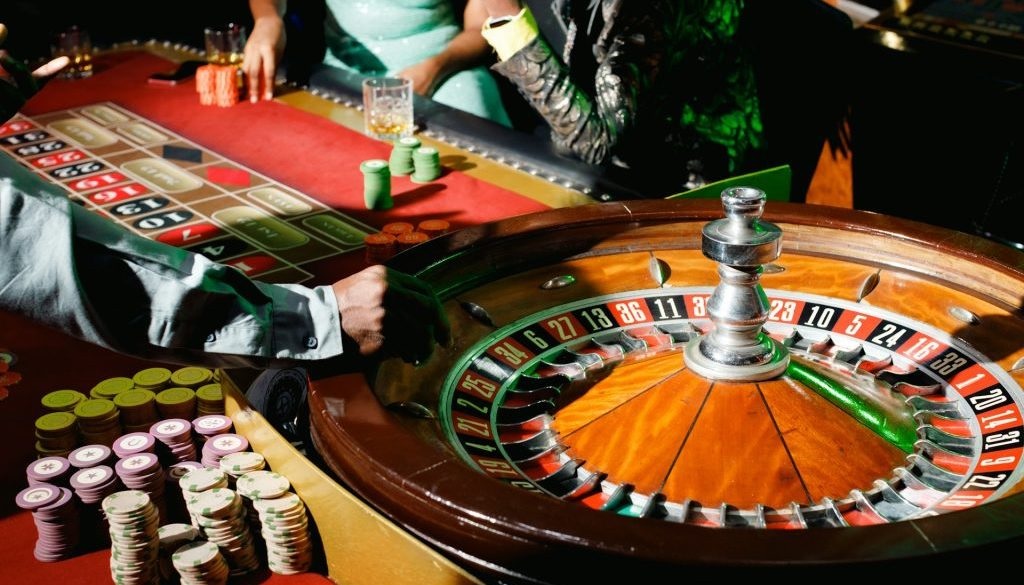
Las Vegas has long held a monopoly on a very specific brand of American escapism. For decades, the clinking of chips, the rhythmic spinning of the roulette wheel, and the plush velvet of the card tables were experiences strictly confined to Nevada or scattered riverboats. Today, however, that geographic and financial barrier has completely collapsed. We are witnessing a massive surge in the popularity of casino-themed entertainment experiences that cleverly divorce the thrill of the game from the anxiety of actual financial ruin.
Consumers are increasingly seeking out the glamour, the social friction, and the cinematic tension of the casino floor in environments ranging from corporate galas to virtual reality living rooms. This shift reflects a broader cultural movement toward immersive, participatory entertainment where guests are no longer just a passive audience, but active players in the evening’s narrative. By removing the harsh realities of real-money gambling, the hospitality industry has unlocked the underlying magic of the casino aesthetic, packaging it into a highly sought-after commodity.
The Psychology Behind the Casino Aesthetic
Why does the casino theme resonate so deeply across such vastly different demographics? The answer lies in the potent psychological cocktail of risk, reward, and performative identity. A casino environment is inherently theatrical. When guests walk into a room filled with blackjack tables, bright lights, and professional croupiers, they immediately step into a persona. The setting gives them permission to dress in black-tie attire, order classic cocktails, and engage in a playful, low-stakes bravado that everyday suburban or corporate life rarely allows.
Furthermore, classic casino games are masterclasses in social design. Unlike a crowded concert or a loud nightclub where conversation is nearly impossible, a craps or poker table naturally orchestrates human interaction. Players are united by a common goal—beating the dealer or outsmarting the room—which instantly dissolves social awkwardness and fosters a sense of camaraderie. By removing actual fiat currency from the equation and replacing it with entertainment chips or tokens, event organizers eliminate the stress of gambling while preserving the dopamine hits of a winning hand. The focus shifts entirely from financial gain to pure social currency, allowing participants to experience the adrenaline of a high roller without the accompanying risk.
The Corporate Shift: From Trust Falls to Blackjack Tables
The corporate event planning industry has been completely revolutionized by the casino concept. For years, human resource departments struggled to design team-building exercises that employees actually wanted to attend. The traditional company mixer often devolved into awkward small talk around a lukewarm buffet, while mandatory team-building retreats were frequently met with collective eye rolls.
Enter the casino night. By transforming a hotel ballroom or a rented warehouse into a bustling casino floor, companies create a structured environment that naturally encourages networking. A junior analyst and a senior vice president can find themselves side-by-side at a roulette table, cheering for the same number to hit. This shared, emotionally charged experience breaks down rigid corporate hierarchies far more effectively than any manufactured icebreaker or seminar.
Event production companies now offer turnkey casino experiences complete with professional dealers who double as entertainers. These dealers are trained to explain the rules patiently to novices, ensuring that everyone feels included regardless of their prior knowledge of table games. The chips are distributed equally at the start of the night, and at the end, the highest earners often trade their winnings for raffle tickets to win company-sponsored prizes. This setup maintains a healthy, gamified competitive spirit while keeping the evening entirely focused on employee appreciation and morale.
Charity Casino Nights: Philanthropy Meets Entertainment
The philanthropic sector has also aggressively adopted the casino theme, transforming the traditional, sometimes stuffy silent auction into a highly interactive gala. Nonprofits are constantly fighting donor fatigue, searching for new ways to make fundraising exciting rather than obligatory. The charity casino night has emerged as one of the most lucrative formats for modern fundraising.
In this format, the buy-in for a seat at the table is the donation itself. Guests purchase a ticket that grants them a set amount of playing chips. If they lose their chips, the solution is simple: they return to the banking table and make another tax-deductible donation to buy back into the game. The psychology here is brilliant. Donors are far more willing to open their wallets when they are actively receiving entertainment value in return. The sting of writing a check is replaced by the thrill of splitting eights against a dealer’s six.
These events often culminate in a live auction where players use their accumulated casino winnings to bid on donated prizes, ranging from vacation packages to sports memorabilia. This ensures that the competitive energy remains exceptionally high throughout the entire evening, driving up total donations and leaving guests eagerly anticipating the following year’s event.
Immersive Dining and Theatrical Experiences
The hospitality industry is increasingly blending dining, narrative, and casino gaming into singular, cohesive nights out. We are now seeing the rise of immersive theatrical venues that operate as fully functional, faux casinos. Guests might purchase a ticket to a 1920s Prohibition-era speakeasy where they must interact with actors playing mobsters, all while playing actual hands of baccarat to unlock clues to an overarching murder mystery.
In these environments, the casino games serve as a physical narrative device. Winning a hand of poker might grant a guest access to a VIP back room where a different part of the theatrical story is unfolding. This integration of gameplay and storytelling caters to a generation of consumers raised on open-world video games. They do not want to sit passively and watch a performance unfold on a stage; they want to walk through the set, touch the props, and influence the outcome. The casino aesthetic provides the perfect, universally understood framework for this kind of interactive, high-stakes storytelling.
The Digital Frontier: Virtual and Augmented Reality Casinos
While physical events are booming in the post-pandemic era, the digital realm is rapidly building its own interpretation of the casino entertainment experience. The metaverse and virtual reality platforms are heavily investing in social casino spaces. Using VR headsets, a player sitting in a New York apartment can meet up with a friend in London, both represented by highly customized avatars, and sit down at a beautifully rendered poker table in a virtual replica of Macau.
What distinguishes these digital platforms from traditional online gambling is the profound emphasis on spatial audio, body language, and social interaction. Players can physically pick up virtual chips, read the subtle head movements of an opponent’s avatar, and chat in real time. The chips used in these environments hold no real-world monetary value; they are purely for keeping score, unlocking digital cosmetics, and earning bragging rights. This genre, known as social casino gaming, strips away the heavy regulatory hurdles of real-money gambling and focuses entirely on the community aspect of the games. It proves beyond a shadow of a doubt that the mechanics and aesthetics of casino games are inherently enjoyable on their own merits.
The Future of Experiential Socializing
The explosive growth of casino-themed entertainment is a testament to the evolving demands of the modern consumer. We are living in an experience economy, where shared memories and participatory events are valued far more heavily than traditional material possessions. Standard, passive forms of entertainment are increasingly taking a back seat to environments that demand our attention, reward our participation, and allow us to step outside ourselves for a few hours.
The true genius of the casino theme is its unparalleled versatility. It can be scaled down for an intimate birthday party in a living room or scaled up for a multi-million-dollar corporate retreat at a convention center. It provides an immediate sense of luxury, an inherent structure for socialization, and a universally recognized set of rules. As technology continues to blur the lines between physical and digital reality, and as event planners continue to push the boundaries of immersive hospitality, the casino-themed experience will only continue to evolve, offering exciting new ways for people to chase the thrill of the gamble without ever risking a dime.
