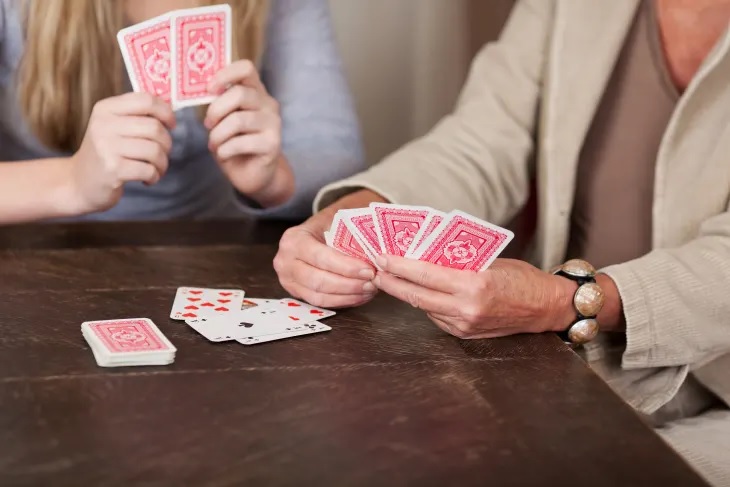
Card Game
The Psychology of Precision: How Cognitive Strategy Shapes Modern Card Games
Card games have evolved far beyond simple pastimes into complex mental arenas where psychology, precision, and probability converge. While traditional mechanics remain the backbone, modern design emphasizes player cognition, adaptive strategy, and meta-awareness. Understanding these psychological elements is now essential for any serious player or designer navigating competitive or high-level play.
The Cognitive Architecture Behind Modern Card Play
Every professional card player understands that victory is rarely dictated by luck alone. Instead, it’s a mental architecture built on pattern recognition, risk assessment, and opponent modeling. The human brain unconsciously categorizes information, and card games exploit that natural behavior.
Cognitive Load Management
In advanced card formats—like deck-building games or draft-style tournaments—players process vast amounts of information. Managing this “cognitive load” becomes the key differentiator between amateurs and experts. Skilled players subconsciously employ chunking techniques—grouping similar card types or strategies—to reduce decision fatigue.
This ability allows rapid decision-making without sacrificing precision, mimicking high-level chess cognition but within the constraints of probability and limited visibility.
Predictive Reasoning and Mental Simulation
The most powerful skill in competitive card play is predictive reasoning—the ability to simulate future game states. Unlike reactive gameplay, predictive reasoning requires dynamic assessment of conditional probabilities and behavioral cues. Players mentally simulate outcomes several moves ahead, balancing mathematical odds against psychological prediction.
This creates an intriguing duality: analytical logic meets human intuition. In essence, elite players train themselves to think several decks ahead, not merely one turn.
Psychological Warfare: The Hidden Battle Across the Table
Card games are a microcosm of human behavior, making them fertile ground for psychological manipulation and emotional control. The table isn’t just a field of cards—it’s a battlefield of minds.
The Power of Controlled Deception
Subtle psychological plays, such as controlled deception or deliberate pacing, can influence opponents’ perceptions of strength or weakness. A player who shuffles slowly before making a move may signal hesitation, prompting an opponent to miscalculate aggression levels.
In professional circles, these cues are recognized as “soft tells”—nonverbal micro-behaviors that reveal confidence or anxiety. Expert players learn to mirror, distort, or mask these cues to create uncertainty.
It’s not about lying with words—it’s about shaping the opponent’s narrative.
Emotional Resilience and Tilt Management
The concept of “tilt,” borrowed from poker psychology, refers to emotional destabilization after a loss or mistake. Modern competitive players invest in emotional conditioning to minimize tilt, practicing mindfulness or mental resets between matches.
Emotional composure isn’t just discipline—it’s strategy. The calm mind calculates better, reacts slower, and sees patterns that others miss under stress.
The Evolution of Strategic Depth in Card Game Design
Card games have transformed from mechanical repetition into systems of emergent strategy, where player decisions alter the ecosystem of play itself. This evolution has birthed an entirely new philosophy of game design.
The Shift Toward Dynamic Ecosystems
In older formats, like traditional trick-taking games, the rule structure remained static. Modern titles, however, such as Living Card Games (LCGs) or asymmetric competitive decks, emphasize dynamic ecosystems—games where meta-strategies evolve continuously.
Each new expansion or balance change shifts the “metagame,” forcing players to relearn strategic balance. This dynamic ensures long-term engagement while rewarding cognitive adaptability over rote memorization.
Risk-Reinforcement Loops
Designers increasingly employ risk-reinforcement loops, mechanisms that reward calculated risks but punish impulsivity. This creates a continuous feedback cycle: the more players understand probability curves and opponent psychology, the greater their control over uncertainty.
It mirrors real-world decision-making under pressure, making competitive play both intellectually demanding and emotionally addictive.
The Rise of Data-Driven Play Analysis
With the integration of analytics, modern card gaming has transcended intuition. Platforms now track thousands of matches, extracting statistical insights into optimal deck builds, card usage frequency, and matchup probabilities.
Players use this data to refine strategies before even sitting at a table. Yet, over-reliance on analytics can also backfire—predictable “meta-conformity” makes a player vulnerable to anti-meta counterplays designed to exploit statistical complacency.
Thus, the next frontier isn’t just data analysis—it’s data interpretation with human unpredictability layered in.
The Role of Memory and Information Asymmetry
Memory functions as a tactical weapon in every serious card game. Since most formats rely on imperfect information, the player’s recall and information organization directly influence win rates.
Active vs. Passive Memory
Active memory involves deliberately tracking discarded or revealed cards, while passive memory focuses on recognizing pattern frequency over multiple rounds. The blend of these techniques creates “situational memory maps”—mental grids that predict unseen cards or opponent tendencies.
Training memory for card play isn’t about memorizing lists—it’s about pattern mapping through repetition and cognitive anchoring.
Information Deception
Just as players use memory to gain control, they can manipulate it. Skilled players create false information trails, leading opponents to believe certain cards have been exhausted or held back. These psychological traps manipulate perceived probabilities and can swing entire games with one well-timed bluff.
The Symbiosis Between Design Psychology and Player Behavior
Card game designers today act as behavioral architects. They structure experiences that provoke specific cognitive and emotional responses, ensuring a balance between chaos and control.
Design psychology emphasizes anticipatory design—creating systems where player actions feel spontaneous but are subtly guided toward emotional engagement. This fine balance keeps games thrilling without overwhelming the player’s perception of autonomy.
Reward Pathways and Engagement Loops
By mapping dopamine response curves, designers fine-tune reward pacing—making every win feel earned but not effortless. These loops sustain engagement without overt randomness, a principle now embedded in successful competitive and digital card ecosystems.
Ethical Boundaries in Psychological Design
However, this overlap raises ethical concerns. When does engagement become manipulation? Responsible design ensures informed participation, keeping strategy and enjoyment balanced without exploiting addictive triggers. The most respected designers recognize the line between challenge and compulsion—and guard it closely.
The Future: Cognitive Gaming as a Competitive Discipline
As card games evolve into hybrid digital ecosystems, cognitive gaming is becoming a recognized skill discipline. AI-driven simulations, neural analytics, and predictive learning tools are being integrated to train decision-making speed and accuracy.
We’re witnessing the rise of cognitive esports, where performance isn’t measured by reflexes but by reasoning depth, adaptive logic, and emotional regulation.
Card gaming, once a test of luck and wit, now mirrors the complexity of neuroscience-based performance training. The modern player is not just a strategist—they’re a cognitive athlete.
FAQs
1. How does cognitive psychology influence advanced card game strategies?
Cognitive psychology shapes decision-making patterns, risk perception, and memory organization, directly impacting how players process information and anticipate outcomes.
2. Why do professional players emphasize emotional control?
Emotional control prevents tilt, ensuring consistent decision-making even under pressure. It allows players to separate emotion from logic, maintaining mental clarity throughout the match.
3. What is the role of data analytics in card gaming today?
Data analytics identifies performance trends, predicts meta shifts, and refines deck compositions. However, blending analytical insight with unpredictability remains the key to long-term success.
4. How do designers integrate psychology into card game mechanics?
Designers use behavioral principles like reward pacing, uncertainty balance, and risk feedback loops to sustain engagement while encouraging mastery.
5. What differentiates modern card games from classic formats?
Modern games prioritize adaptive ecosystems, evolving metas, and player-driven narratives, offering deeper cognitive engagement and ongoing strategic evolution.
6. Can card gaming improve real-world cognitive skills?
Yes, it enhances memory retention, probabilistic reasoning, and emotional regulation—skills applicable to strategic thinking, negotiation, and even business decision-making.
7. Is psychological manipulation considered ethical in card play?
Within competitive boundaries, controlled deception is a legitimate strategy. However, crossing into psychological coercion or unethical mind games violates fair play principles.
Since Edward O. Thorp released his book, Beat the dealership, in 1962, women and men happen to be flocking to casinos to test their hands at card counting. Most leave behind the table disappointed, however, his or her understanding of card counting isn’t complete enough to achieve success. Additionally, it does not help that casinos use numerous methods and methods to battle card counters, which list is devoted to a few of the more prevalent methods.
1. Except for Atlantic City, casinos through the U . s . States possess a right to inquire about any player to depart. When they can’t discriminate based on gender, race, or age, that also leaves lots of latitude for ejecting a person. Casinos will not hesitate to toss out a effective card counter, and they’re going to visit great lengths to ensure that they’re from playing there later on. For this reason many effective advantage players use disguises.
2. Casino employees are the initial type of defense against card counters. Blackjack dealers will frequently be trained to count cards to be able to place advantage players, while other tell-tale signs include large buy-ins and bets, in addition to table hopping.
3. Whenever a player all of a sudden increases their wager, the home may counter by shuffling them. This could hurt the home, though, because the more hours spent shuffling cards reduces the amount of hands performed and also the casino’s overall earnings. This issue could be overcome, however, by utilization of a computerized card shuffler.
4. Because so many card counters choose to stand away from the table, count them, after which sit lower when they are better off, some casinos may prevent beginners from entering in the center of footwear.
5. Some blackjack tables now include scanners which check out the play of every individual to check out patterns that may indicate a benefit player.
6. Counting cards requires concentration, therefore the casino is known to transmit an worker to engage the credit card counter in conversation. This distracts the gamer, stopping them from keeping a precise count from the cards. In past decades, much more physical methods were utilised.
7. The pit boss can require player to flat bet, meaning they have to wager exactly the same amount on every hands. Since card counting depends on making large wagers once the cards have been in the player’s favor, this functions as a good deterrent.
8. Additionally to keeping photos of known card counters, casinos might also employ image recognition software made to help look out of the disguise of the advantage player.
9. Surveillance systems are set up in each and every major casino, which may be used to monitor and identify a card counter.
10. The casino may alter the rules in a table to discourage advantage players from sitting lower. This could range from the rules regarding playing multiple hands, splitting, doubling lower, or even the amount wagered throughout a show.
7 card is among the most widely used poker games, both at on the internet and land-based casinos, 7 card poker is really a bet on both strategy and talent. Because of the fact that the way you play relies upon what cards the other players are playing, the easiest method to get the mind round the technique of the sport would be to learn how to approach certain scenarios.
Beginning Hands
There aren’t any community cards in 7 card poker. Therefore whichever cards you’re worked are the own unique cards. You need to always bear in mind which cards the other players have. Also, since the dealer are only one deck, you shouldn’t hold on for just one specific card. There’s a more powerful likelihood that your opponents is going to be holding the credit card.
If you notice that in the beginning hands that the opponents are holding more powerful cards then you need to fold. Case a guide, however. In the finish during the day you that has to evaluate how strong your hands is as compared to the others.
For instance, if you’re chasing a flush as you have been worked three suited cards then you need to to research the table. Should there be a number of other cards of the identical suit up for grabs then you need to fold. However, if you don’t see a lot of that fit then there’s a greater chance you will get them that you would like.
The very best hands to begin with is journeys. Although Aces are the most useful journeys you could have, any journeys continue to be a effective hands. Other hands that you ought to certainly play are big hidden pairs and large open pairs.
The Memory Game
The memory 7 card poker strategy, by which among the first things that you’ll do is review your opponents’ cards. You will see players while dining who fold their cards and fundamental essentials cards you should know. It might achieve a stage hanging around where you stand wishing to show a particular card and if you’ve been in a position to recall the cards that the opponents have folded then you’ll determine if the credit card might well be still in play or otherwise. A great tip would be to recall the folded cards in some type of statistical sequence. Any pattern can help you remember better. The greater you need to do this, the simpler the habit of smoking will end up.
The Roads
With each and every new card that’s worked you need to increase your odds of winning. Once more you need to turn to your opponents’ cards. If you don’t obtain the card that you would like and also you observe that your attacker has possibly elevated his/her likelihood of winning then you need to consider folding your hands. 4th street is a great time for you to assess if you want in which to stay the hands.
From fifth street things be interesting since this is frequently once the bets develop and also the less strong hands happen to be weeded out. If you’re set for the showdown then you have to be very confident you have the nuts. If you choose to bluff you will want to make certain that you simply bet the other players from the hands. Failing to do this will undoubtedly give another person a large part of your stack.
The Waiting Game
A sizable part of 7 card poker technique is persistence. The greater you take part in the game the greater you should understand of what’s going on surrounding you and list of positive actions in a few instances.
5 Card poker requires lots of persistence. The truly amazing factor relating to this type of poker is you see a number of your opponents’ cards. However, bear in mind that they’ll visit your cards too. If you wish to win the pot then generally you need the most powerful hands. However, there’s a 5 card poker strategy which can make other players doubt their very own hands – even when their hands were more powerful than yours.
There are specific strategies will increase your odds of winning. An important factor to keep in mind is the fact that poker isn’t just a 1-hands game. Minimizing your losses is as essential as winning a large hands. By playing safe where you have to, you’ll be able to maintain your stack searching healthier to be able to bet around the cards that count. In addition, you will find 4 betting models in every hands so even if you choose to play out of your first cards which are worked it doesn’t mean you need to remain in before the showdown
They are things that can be done to be able to better your odds of winning also to decrease your odds of losing. Poker is about balance contributing to knowing when you should play so when to back lower. Actually, the very best poker professionals are individuals who know when you should fold.
Bear In Mind –
By bearing in mind what 5 cards the other players have and what they’ve folded will help you to possess a better grasp on whether you’ve got a potentially winning hands or otherwise. This is probably the best advicebecause you can’t play 5 card poker inside a vacuum.In your 5 card poker strategy If you’re able to see certain cards that you’ll require as part of your opponents’ hands then you need to consider folding. For instance, if you’re chasing a flush then you need to to research the table. If there are hardly any cards from the suit you’re chasing then you’ve a more powerful possibility of getting individuals cards worked for you.
Never Bet Together With Your Ego:
Folding your hands if you notice that the opponents cash more powerful hands isn’t an awful idea. You aren’t designed to win every hands in poker. It is sometimes smarter to be cautious rather than play strongly. Every now and then it’s okay to bluff, but this ought to be the exception and never the rule. The other players will begin to read you also easily by doing this.
There’s no shame in folding a hands. Going completely by having an average hands is only going to kick you within the teeth in the showdown since the longer you remain within the hands, the greater money you’ll be tossing away. This can dent your confidence for the following hands or lead you to tilt. If you discover this happening you need to either step from the game or begin to play a great deal safer til you have collected your ideas again.
Chasing The Straight
If you’re chasing an upright then you have to be sure that you’ve a adequate possibility of hitting it. By searching around while dining you’ll be able to find out if them you’ll need have been in sight, or may be still likely to be attracted.
How you can Win and Beat the dealership Blackjack – Card Counting Basics
If you’re searching for tips about how to beat the dealership blackjack, then look at this. Become familiar with ways to use the card counting method to increase your odds of winning.
The best way to conquer the dealership would be to keep an eye on all of the cards worked. For the players, specifically for individuals who’re regarded as professionals, beating the dealership is becoming super easy on their behalf. This is due to their understanding regarding how to count them.
Card counting strategy is in deed super easy. It may be quite confusing sometimes for that starters because card counting ought to be done inside a fast pace. Everyone knows how quickly them are worked within the blackjack table that’s the reason it’s imperative so that you can count fast.
This tactic offers the players with better grasp in regards to what cards happen to be worked and which of them remain around the deck. Understanding what cards a left around the deck is extremely beneficial towards the players because they’re going to have the opportunity to predict what cards can come out next. This tactic creates two major possibilities for that players. One is they could make bigger bets when they could identity the likelihood of winning are together. They are able to improve their bet when they observe that all of the cards with small values happen to be worked and also the 10s and also the Aces continue to be around the deck. At these times, there is a bigger possibility of hitting victory and beat the dealership blackjack. And, two players may use more details concerning the remaining cards to boost their technique for a particular hands performed. For instance, the gamer can double lower when there are other 10s left around the deck as this opens an chance to allow them to obtain a strong hands for winning.
The idea does require players to keep in mind all of the cards that are already worked. Rather, a place product is done to enable them to keep an eye on cards with a simply point count. Once the 10s are worked first, the purpose count ought to be -1 so when cards with low values for example 2-6 are worked, 1 is its designated count. The truly amazing winning advantage is quite possible when all of the low cards happen to be worked already.
Carrying this out within the casino is legal. This isn’t cheating. The majority of the casinos allow card counting. However, it might be safer for that players to complete the counting psychologically. Casinos have the authority to ban players from playing blackjack once they understand that these players are counting more frequently. Remember that the casino generates make money from the losses from the players and when the gamer is winning more frequently, they often ban them and cheating through card counting is frequently their alibis. So, players must be cautious when you are performing this in casinos.
Blackjack card counting is the only method to turn the house’s advantage around as well as in for your favor. When performed properly (using proper fundamental strategy), an average casino blackjack game holds under singlePercent advantage for that casino. Whenever you give a good card counting method to perfect fundamental strategy, the benefit is not using the casino, however with the gamer.
Exactly why card counting works really is easy. The gamer is more prone to win when there are numerous high cards within the deck and also the dealer is more prone to win when there are other low cards within the deck. High cards are great for the gamer because even should there be lots of high cards left within the deck, the dealership continues to have hitting on hands like 12, 13, 14, 15, and 16. When there are numerous high cards left, the dealership is going to be busting a lot more frequently. High cards will also be great for the gamer simply because they increase the likelihood of obtaining a blackjack. So, within the most fundamental terms, once the player knows there are numerous high cards left within the deck, he should bet more income and fewer money when you will find less high cards left.
As described above, we do not mind to keep an eye on the number of of every individual card values are remaining. We simply worry about the number of low cards to high cards. Generally, this is achieved by counting low cards as 1 and cards as -1. Every time a card is worked you can either add 1 or take away 1 out of your running count. Once the number is high, you realize there are other high cards than low cards so you ought to be betting more income. Once the count is low, you ought to be betting low.
It was just introducing card counting. Please visit our other articles for various card counting methods. Among the easiest to understand may be the Red 7 Count, so make sure to take a look at our website. Remember, card counting is useless unless of course it’s combined with proper fundamental strategy. So, there are learned it yet, make sure to review our articles on blackjack fundamental strategy before diving into card counting.